In 1999 I was a young architect with a problem I could not solve. Every sustainability project I worked on fixed one thing and broke another. We would lower a building's energy use and raise the load on its water system. We would clean up a supply chain in one country and move the damage to the next. We kept treating each system as a pile of separate parts, and the results stayed thin. I wanted a way to see a whole system at once, and then to steer it.
That became SiD, Symbiosis in Development, a framework for designing and steering whole systems toward regeneration. It now exists as a 468-page book you can read free as a PDF, and a learning platform where you study the method with an AI tutor and earn a certificate.
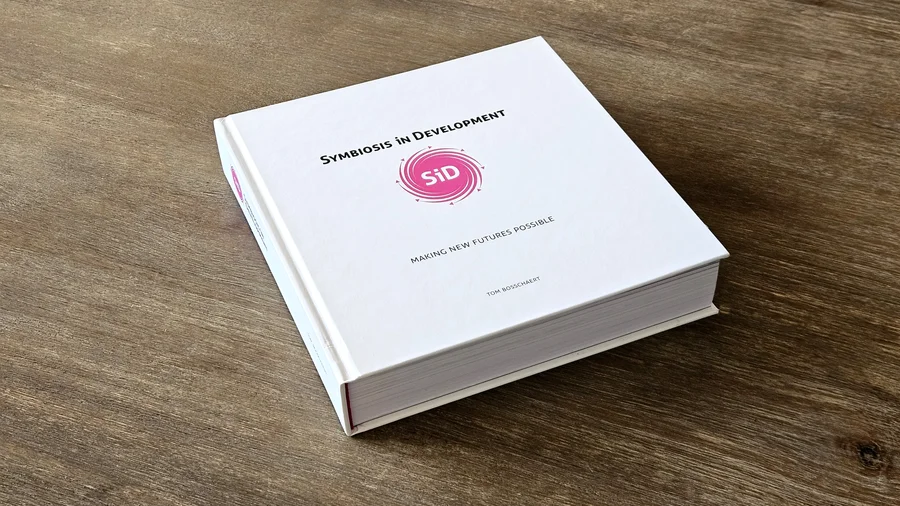
The book took twelve years to write, design, and print. We made it at Except Integrated Sustainability, the firm I founded in 1999, and developed the framework with dozens of experts over two decades. We released it for free. SiD is open source, under Creative Commons and supported by the Except Integrated Sustainability Foundation, so anyone can read it, teach it, and build on it. We did that on purpose: a method only a few consultants can use does not spread, and these problems are shared. The longer reasoning is in Why SiD.
A method only a few consultants can use does not spread far. We wanted the opposite, so we made SiD open.
One map for a whole system
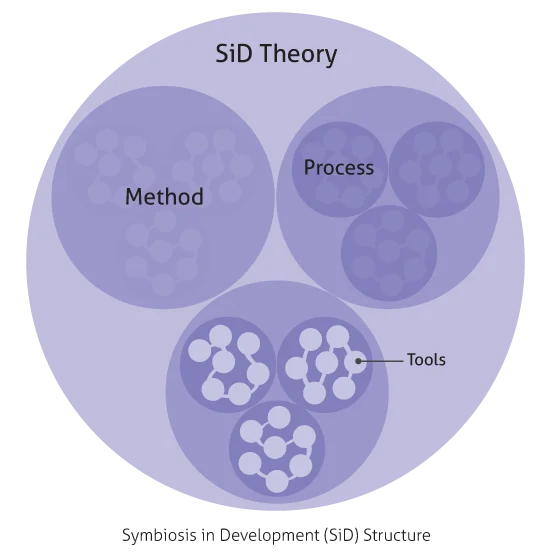
SiD gives you a way to look at any system, a neighborhood, a factory, a watershed, a company, and account for what matters without drowning in detail. It has four layers, theory, methods, processes, and tools, so you can move from how a system works to the specific decisions on a project. It reads a system across three dimensions, context, time, and space, and at three levels: the system, the network around it, and the object inside it. Two lenses do most of the work: ELSI and RAH.
ELSI: the four dimensions
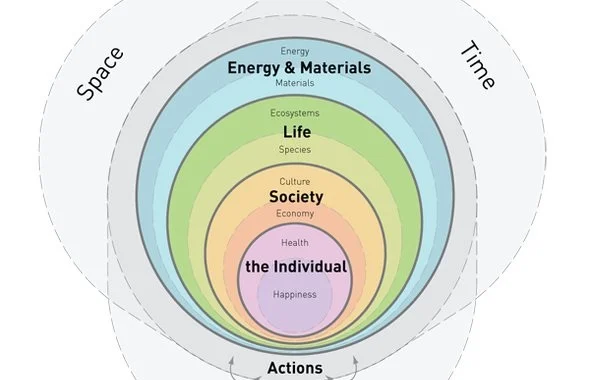
ELSI sets out four dimensions of sustainability: Environment, Liveability, Social, and Institutional, divided into eight sub-domains. A project can cut its carbon and still weaken the neighborhood next to it. ELSI is the discipline of checking all eight before you call a design finished, so a gain in one dimension is not paid for in another. The full breakdown runs across the 36 articles of the documentation, in five parts.
RAH: resilience, autonomy, harmony
ELSI tells you where to look. RAH tells you whether what you are looking at can hold, through three questions. Resilience: can it absorb a shock and keep going. Autonomy: can it run without constant inputs from outside its boundary. Harmony: do its parts support each other rather than work against each other. These sit under our 2019 definition of sustainability: a system that flourishes resiliently, in harmony, without requiring inputs from outside its own boundaries. RAH is how you test a design against it.
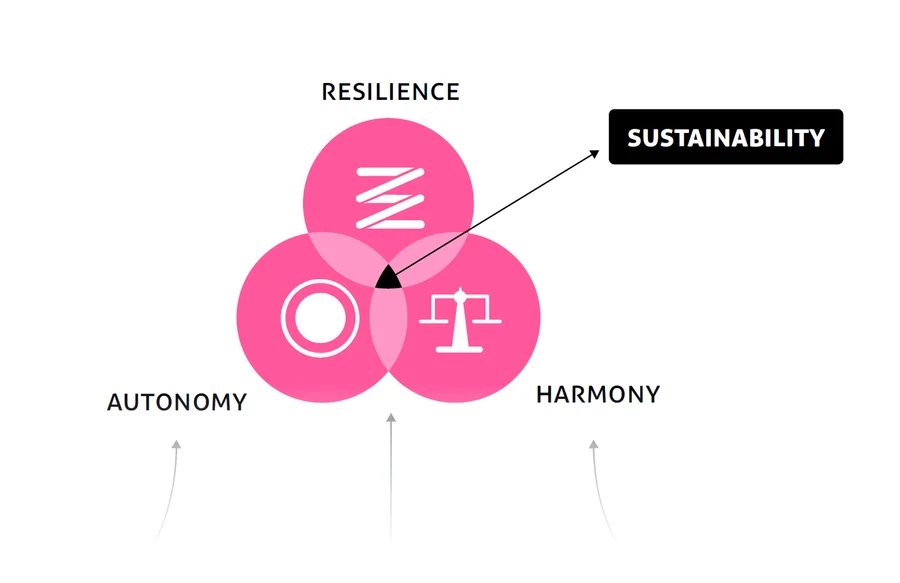
Sustainability is a system that flourishes resiliently, in harmony, without needing inputs from outside its own boundary.
What changes in practice
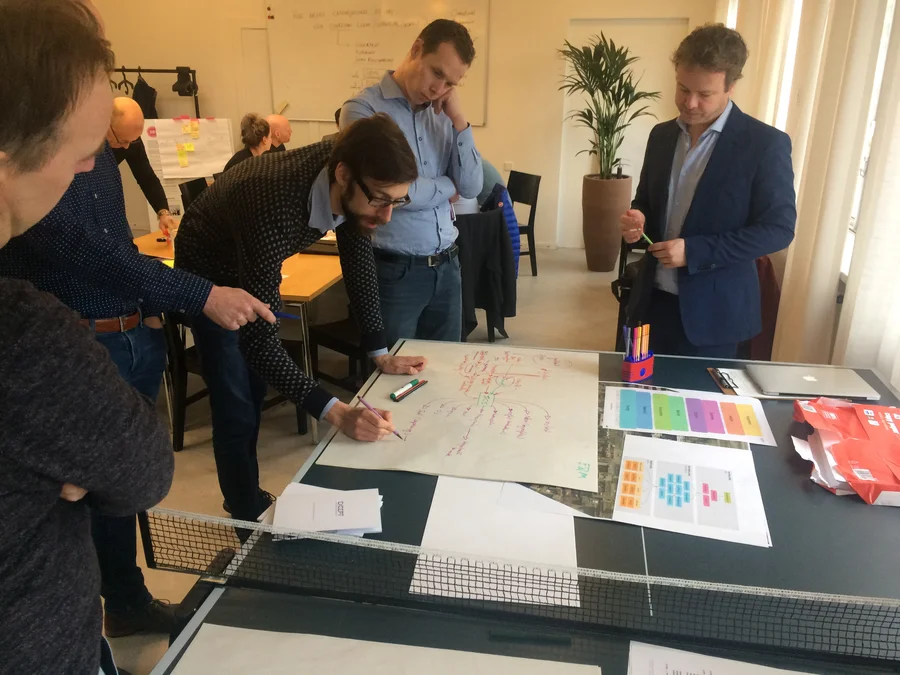
Teams stop arguing about which single goal wins, carbon or cost or community, because they can see all of them on one map and trade between them deliberately. Discussions that used to stall tend to move once everyone is looking at the same picture. SiD has now been used on more than 700 projects across six continents.
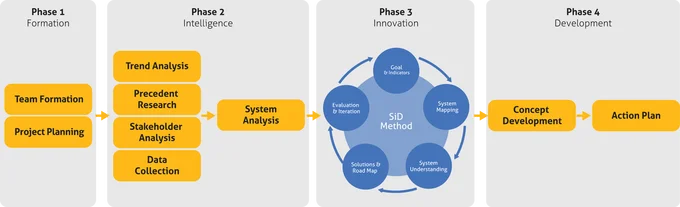
I led IKEA's supply-chain sustainability program with it for seven years, and built Heineken's circular roadmap on it. We have used it on Schiphol, on Polydome, and with Pizza 4P's in Vietnam, where it had to work inside a fast-growing restaurant business rather than a planning office. The case studies are the record of what it does in practice.
How to learn it
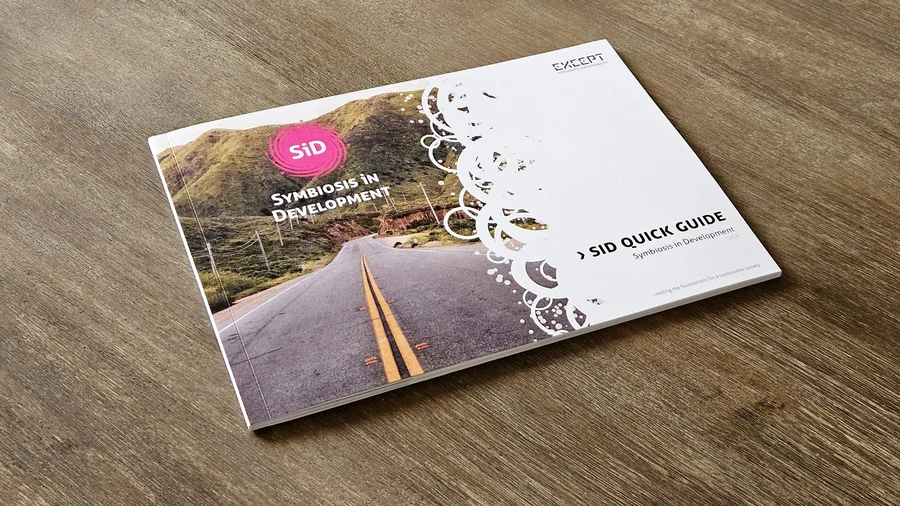
The book is the full reference, and it is long. For a faster start, the Quick Guide is about 50 pages, free, and also available in Japanese and Chinese. To learn the method in depth, the learning platform covers it across 64 units and around 55 video lectures, on three paths, with an AI tutor named Carl that teaches by Socratic dialogue. Finish a path and you earn a verifiable certificate. Complete The Complete Program and you earn the SiD Complete certificate. It costs around EUR 20 a quarter or 45 a year.
To use SiD with a team rather than study it alone, the workshop templates and posters pack is free, made so a group can run the analysis together around a table. For the long version, with the full case for systemic design over symptom-fixing, I wrote it out in this essay. The question I started with in 1999 is still here. What is different now is that there is a worked-out way to answer it, open to anyone.