Vietnam Is Building the Last Industrial Revolution
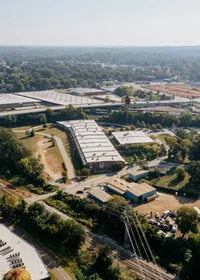
Vietnam is building 410 industrial zones. Built as isolated objects rather than systems, they risk locking in a century of avoidable damage.
The Architecture of Organizational Resilience
Scenario planning fails, structurally and repeatedly, for the risks that threaten global companies most. Resilience-based systems analysis does something else.
Why Circular Economy Fails Without Systems Thinking
We are investing more in circularity and getting less of it. The problem is not resources or ambition. It is the level at which we are thinking.

Sustainability Strategy vs. ESG Strategy
ESG is a financial risk tool built for investors. A sustainability strategy is a transformation roadmap. Mistaking one for the other exposes a company to real risk.

Regenerative Cities: Building Cities That Flourish
Cities consume 80% of global energy and emit 70% of CO2. Regenerative cities produce more energy, clean water, and biodiversity than they consume. What that looks like in practice, from district heating to urban food systems.

Circularity Is Not Sustainability
Circularity alone cannot deliver sustainability. Without a systemic view, a well-intentioned concept distracts us from the goal it was meant to serve.

The Ongoing Earthquakes in ESG-Land
Mandatory reporting, double materiality, and the shift from voluntary to enforceable frameworks are reshaping how businesses report and operate.
The Rise of Systemic Investments
Systemic investing changes the direction of capital flows, not just the allocation. Transitioning whole supply chains, energy grids, and food systems rather than picking individual companies. A framework for investors who want leverage, not labels.
New Climate Insight, Revealed
The world's militaries and insurers make some of the most pragmatic climate predictions we have. They plan for adaptation, not headlines.
Catalytic Buildings
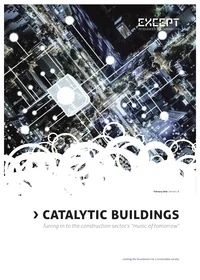
Next-generation buildings that raise the economic, social, and physical sustainability of an entire urban area, going well beyond energy neutrality.
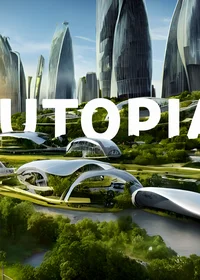
Learning from Failed Utopia
Two hundred years of utopian city projects, and what they teach us about the ones we are building now.
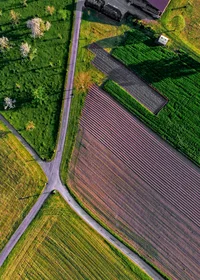
Natural Capital and New Innovation Strategies
Embedding the value of natural systems into economic ones is one of the few real answers we have to ecological decline. Here is how to accelerate it.
ThinkSiD
An open learning platform for systems thinking and sustainability, built around the SiD framework.
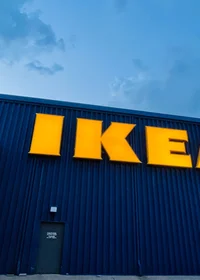
How the IKEA Catalogue Changed the World of Print
At 200 million copies a year, the IKEA catalogue was the most printed book on earth. A three-year systems project changed the global paper and print industry.
Greenprint
More than 150 pages of innovations in sustainable homes, cities, and daily life. Creative Commons licensed.
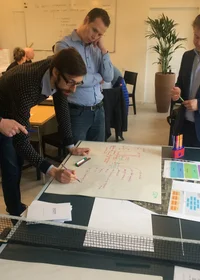
Symbiosis in Development
In 1999 I had one stubborn problem: every sustainability project I touched fixed one thing and broke another. SiD is the way out I built, a framework for designing whole systems, a 468-page book you can read free, and a place to learn the method.